Showing posts with label teen. Show all posts

Friday, August 31, 2018

Six Pilots To Pitch aka You Wanna Watch This?

In the last year I’ve worked on finalizing half a dozen pilot scripts for competitions, pitch packages and as projects with other creatives.

Details about the shows are below. Feel free to let me know what appeals the most. The goal, of course, is to sell them all!

Each is a one-hour scripted drama with a written pilot and a planned season of storylines including multiple subplots. The end of every pilot episode has a great set-up or plot twist for the series.

Why do I think I have the ability to script a popular drama, you ask?

On the writing front I’ve written three novels, have a short story collection coming out soon, covered television for newsprint and websites, had my TV blog links liked and reposted by cast and crew of US shows I’ve discussed, written scripts and production schedules for music videos, and work as a features and content writer. (Oh, and took scriptwriting units at university.)

And of course I’ve watched thousands of one-hour TV dramas. I’ve counted scenes, subplots, noted trends, and compared small screen storytelling styles from around the globe. From the technical to the entertaining, structural to visual, I’m certain I can create material that will appeal to the current market.

Before you check out these six TV shows, please note the scripts are copyrighted for those feeling slight-ly too inspired by the concepts.

...We all know how this meme ends.


Saving Beauty

Interpretation of Sleeping Beauty by painter Thomas
Ralph Spence. My version has less flowers, more sword fighting. 
Logline: Sleeping Beauty is considered a disempowered female character. But what if falling asleep makes her powerful? And what if she’s the one saving the kingdom?

The concept: On her 17th birthday Princess Ava discovers she’s a Dreamer. The ability to manipulate the dreamscape threatens the power of the High Queen, and all Dreamers are sentenced to death.

Friends and family manage to save Ava’s life, but at a terrible cost. Now the Robin, commander of the rebels, wants to enlist and control her. Only a powerful Dreamer can defeat the High Family.

Whoever controls the dreamscape, controls the world. Ava’s only choice is to become a leader, and control her own destiny.

Elements that stand out: The Sleepers. In each kingdom, once an heir is born, a member of the royal couple is put into an enchanted sleep by the mages. This way the High Queen and High King control the other royals. Once a year they wake up. The rest of the time their consciousness is locked in the dreamscape.

The High Princes. Four brothers make up the High Family. The mysterious mage Alex, identical twins Marcus and Jerome, and the beautiful prince Alex. Their history is complicated, as is their struggle for power.

What I like most about the series: The people who love Princess Ava are as dangerous to her as her enemies. Most of the characters want to protect, manipulate, kill, or use her.

This is a tale of a teenage girl’s empowerment in a ruthless world where everyone has an agenda.

Key sells: Fantasy, Teen, Dream State, Female Empowerment, Action, Adventure.

*Read a sample here.

The Guardians


Logline: Guardian angels have been released from their duty of care but are still bound to a soul. They fight for control of this reality by manipulating their assigned human. The story moves between the present day where people begin to hear a single voice and a future where mankind is at war on behalf of the angel factions.

The concept: People begin to hear one voice, and see an “imaginary friend”. Most think they’re going crazy. Slowly they accept the apparitions are telling the truth: guardian angels are no longer silent, or forced to protect us—and they’re not going away.

Guardians know every memory and desire. Some want to be friends, others want to break people and use them like puppets. Control of this reality through humans is the end game.

In the future timeline set a few years forward, the characters lead very different lives, fighting for various angel factions.

Elements that stand out: Complex Characters. The leads range from an elderly businesswoman mourning the recent death of her wife to a young male veteran dealing with PTSD and life as a stay at home dad.

Guardians appearing/disappearing. In some scenes the audience sees what the characters see which is a person standing beside them. In others, the angels aren’t visible; reminding us it’s all happening in people’s heads.

A split timeline. War rages in the near future. Just a few years have passed yet the leads have changed immensely.

What I like most about the series: The friendship between a young Mexican American teenage girl who is a cutter as a result of bullying, and a young Japanese-Korean teen guy living in America who doesn’t seem to have a guardian.

Key sells: Supernatural, Psychological Thriller, Suspense, Science Fiction.

Insta-Dead


Logline: America’s favorite teen social media star Sally is murdered. The prime suspects are Sally’s six famous Instagram “besties”. Her sister Amy takes Sally’s place in the social media crew to unearth the killer.

The concept: When Sally is murdered at a party, her quiet sister Amy decides to find the killer. The only way into Sally’s famous crew is to become an Instagram icon—but Amy doesn’t use social media.

Signing with Sally’s agency, she learns online fame is big business. The number one rule: protect your persona at all costs. Endless parties, fake relationships, online stalkers and the politics of endorsement make it clear Amy is in over her head.

The six teens at the party with Sally claim they want to clear their names but one has to be the murderer. As she learns more about their lives (and lies), Amy discovers the murder was meticulously planned. Instagram posts hold the clues—she just needs to figure out what to look for…

Elements that stand out: If you grew up on a diet of Buffy, Veronica Mars and Pretty Little Liars, you’ll know how great it is to watch teenage girls find their strengths and navigate risky waters.

At first Amy doesn’t have the social skills to tackle the case. And the more she learns about Sally, the more she realizes she hardly knew her sister.

What I like most about the series: The teen leads are ambitious but also insecure, and will do anything to keep their secrets hidden. The mean girls (and boys) have millions—in money, and followers.

When everybody is so good at being fake it’s hard to tell whom to trust.

Key sells: Teen, Murder Mystery, Social Media, Female Lead.


Sound


Logline: Residents of the quarantined city of Sound live off performances by the world’s best musicians. The groundbreaking experiment sees the body source energy from sound waves—but with unexpected side effects. Facing a food-deprived future, how far will those in power go to hide the truth?

The concept: Based off my novel, the plot follows the arrival of a young woman, Cecilia (Ces) in the city of Sound. Live performances are amplified through special speakers, with citizens surviving on a mix of food and sound waves.

Ces moves into Hotel Vigoroso, owned by the famous musician Jesse. His previous band mate Michael no longer speaks to him, having been changed by the music. Turns out, making tunes has as many side effects as feeding on them.

Regular visits to the Clinic are meant to help the people of Sound. Yet those detained are often never seen again. And with patrollers observing more than they police and protect, the streets are not safe.

The experiment calls for minimal tech, and the city has no contact with the outside world. Resident artist Brad teaches Ces about life in the city, along with Daisy, a veteran and survivor of a terrorist attack whose fractured mind may be the key to keeping the citizens of Sound alive.

Elements that stand out: A love of music. Sound amplifies the idea you can become addicted to a musician’s output.

The cultists. Ceruleans wear blue robes and animal masks. They live in an abandoned theatre, and many work in city’s red light district. Now and again the officials collect them in “sweeps”. Many never return.

The children. The side effects of Sound are most obvious in babies born in the city, a fact hidden from the world.

What I like most about the series: As the story progresses the audience wonders if Ces may be an unreliable narrator. How much of her experiences can be trusted? Visual symbols that act as clues and moments of delusion show Ces’ perspective might not be one hundred per cent trustworthy.

Key sells: Science fiction, music, dystopia, psychological thriller.


Jedi AF
 
If you haven't seen the EXO Lightsaber
clip go and watch it right this minute.
Logline: In an alternate version of the present day Jedi and Sith are members of society. Identified by a special gene, many work in law enforcement or for the underworld, while others are rogues or loners. When a powerful teenager emerges from the city’s slums, the fight is on to secure his services and gain control of his power over the Force.

The concept: Disney owns Star Wars so this is almost impossible to pitch but since I was a child, writing Jedi’s into the real world has been my dream. Lightsaber fights on the streets after dark… How cool would that be? Teen angst meets the Force in neon-soaked settings. Young Jedi are prone to becoming vigilantes and young Sith are prone to running in packs

Certain Jedi and Sith bloodlines have become surrogate royal families, ruling the corporate world—or the Underworld. And after a century of relative peace, Jedi and Sith are on the verge of outright war.

With, Anti-Force sentiment is high among ordinary humans, a special task force, made up of Jedi and Sith exists to monitor Force users. Powerful Force users are considered dangerous and must choose an affiliation: Jedi or Sith.

For a poor teen with no allies it’s a dangerous time to discover you can control the Force.  

Elements that stand out: Blurring the line between the Jedi and the Sith. In this reality some Sith are kind, some Jedi ruthless. Good and evil are less distinct.

The visuals. Kpop group EXO released Lightsaber in 2015 in conjunction with Disney, a collaborative MV/film that captures the visual aesthetic of a modern Jedi/Sith drama.

What I like most about the series: The Jedi/Sith conflict being transplanted to a gritty, urban setting. The series draws from but is not limited to existing mythology.

Jedi, Sith and Social Media. The idea of young people posting about and stanning famous Jedi (or Sith) is a surreal side note.

Key sells: Teen, Star Wars, Jedi, Action, Adventure.


Gateway


Logline: In near-future New York the drug Gateway is the darling of the party scene, but users don’t realize the dahlia-printed paper slips open the door to more than the subconscious. Taking the petal lets you see into the Otherworld. And sometimes, gods and spirits hitch a ride back.

The concept: The pilot establishes Gateway is a supernatural drug that opens the mind to the  Otherworld, allowing creatures banished from Earth millennia ago to possess a human while the drug lasts.

Most consider Gateway a hallucinogenic. Only a few know the Otherworld is real, short-term possession happens, and the gods have a plan to stay on Earth permanently.

Mysterious Gateway dealer Col sells mostly to rich kids on the clubbing scene. One night he reluctantly gives Gateway to some friends, setting off an unexpected chain of events.

Now Col and Brianna have to find the secret government agency that took their friends, deal with a possession and a vengeful god’s agenda, all while avoiding the two cops closing in on Col.

The story follows a mix of characters caught up in an Otherworld conspiracy. They’re knowingly, or unknowingly connected. And every one of them has secrets they want to protect, even the gods.

Elements that stand out: Futuristic Graffiti. A fusion of tech and street art hides messages on walls that only phone filters and programmed eyewear can find.

Vigilante Parkour Crew. Female lead Briana is a member of The 88, who uses holos to hide their profiles. “Faceless protecting the faceless. Justice for areas cops won’t cover.”

Visions. Those on Gateway see things from the past, as well as looking into the Otherworld. More than one doorway in the mind opens.

What I like most about the series: Love triangle. The musician Sara relies on Gateway to see her muse in the Otherworld, the fae Tristan. She also lives with Agent Barnes, who tracks Gateway dealers.

Halfies. Alex and Simon are known as halfies because one parent was on Gateway and possessed by a God during conception. Halfies have special talents, including the ability to sense when a possessed person is near, but are prone to emotional issues.

The atmosphere. Mostly shot at night, Gateway is dark and fast paced and has an eerie, tense vibe. The visual style could be called “dystopian tech”.

Key sells: Supernatural, Drama, Nightlife, Psychological Thriller, Procedural, Action.


Thanks for reading. My email is gilliano@iinet.net.au if you have any queries.

Thursday, November 30, 2017

Bullying And Storytelling On Television


Bullying can have long-term, complex psychological impact. Watching a teen show recently, I wondered at the use of bullying in the plot. On television bullies are an easy source of conflict because most viewers can relate. But if the writer isn’t careful, the subtext becomes twisted.

What troubled me was the way the script normalized the “mean girl” character. The adults facilitated her behavior by ignoring it, and the other kids accepted her dominance because it was easier than challenging her. From the outset she was given tacit permission to act in such a way; only as her actions become more outrageous did anyone respond, or confront her.

That made me think about how common it is to present television stories where the bully is ALLOWED to bully, especially in teen storylines (workplace bullying and bullying at home are also common small screen themes but I thought I’d focus on teen TV).
Buffy The Vampire Slayer offered a great example of a
bully who experiences epic personal growth.
As a writer I’ve used bullying in scripts and stories. People identify with the struggles of the persecuted, and a bullying storyline creates an immediate empathetic link with a majority of viewers.

But I don’t want to normalize it: presenting a bully whose viciousness is not just recognized, but tolerated almost endorses their behaviour. In an era where victim blaming is being put under the spotlight, a lot of bullying plots from the past and the present carry disturbing connotations.

What are we communicating to teens? That a bully is a fixed personality type? That someone making your life awful is more about how you deal with it, rather than anyone—adults or peers—forcing the bully to take responsibility for their behavior?

Rarely is the bully expected to grow; in many teen shows the bully is just an enemy to be “defeated” in whatever way the plot chooses. Responsibility for action centers on the victim; the victim’s choices undergo more criticism and censure then the persecuting character.

The bully has become an accepted, and often two-dimensional storytelling roadblock. For me that is problematic. Why are we tacitly endorsing this idea? No adults should turn a blind eye to a youth bullying others‑it is NOT normal. Likewise, teens shouldn’t see avoiding dealing with bullies as the “normal” response. Scripted television should be able to offer better food for thought than that.
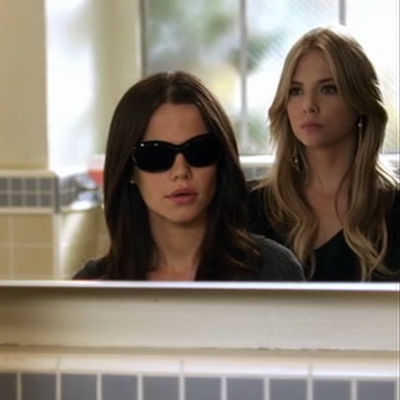
Pretty Little Liars wove some tangled
(and thought-provoking) bullying webs.
The best scripts present the bully not as a fixed, simplified power tripper, but as complex individuals; narratives should delve into the relationship between the bullied, and the bully. At least try to make us see the bully's perspective. Or more accurately, how they became the persecutors they are, and why they feel compelled to act in such a way—without downplaying the victim’s pain.

In many cases a friendship or relationship evolves from the conflict between bully and victim—but not at the expense of the victim’s self-worth. While the bully’s motivations/issues are addressed, a good writer makes sure it isn’t at the expense of the victim: their trauma cannot be minimized.

Gossip Girl saw Jenny move from victim
to bully, in pursuit of social status.
I’ve compiled a list of ten shows where I felt the story didn’t just exploit bullying as a cheap narrative tool, but instead offered food for thought—whether in a good or bad way.

Moral of the story? People hurt each other: they’re flawed, scarred, and worth trying to understand. But bullying is nobody’s right, and victims shouldn’t be expected to handle it alone. Society needs to tackle that misconception.

Veronica Mars: Veronica and Eli/Weevil, Veronica and Logan


The pilot of Veronica Mars sees Eli’s bullying of Wallace evoke a response from Veronica. By choosing to stand up to him, Veronica wins his grudging respect and a wary friendship develops.

The revelation of Eli’s affair with Veronica’s murdered best friend Lily adds complex layers to his character. Other episodes offer insight into the discrimination he suffers. Over the series we see him repeatedly choose to assist Veronica.

Prior to the tragedy Lily’s ex-boyfriend Logan was Veronica’s friend. Now he bullies Veronica, but as the story unfolds they become lovers. The audience sees the domestic abuse he suffers, and how repressing his complex emotions over Lily’s death have skewed his personality. Working to solve Lily’s murder helps both of them heal.

Veronica Mars tackles grief and PTSD, but what I think is fantastic is that in each of these changing relationships, Veronica is never disempowered. She’s not at the mercy of anyone’s whims; she chooses how each relationship progresses.

Brenda’s Sleepover in Beverley Hills 90210


I saw this episode of Beverley Hills 90210 when young but it always stuck in my mind. Brenda has a sleepover party. This is uncool for the crew in the upper zip code, and Brenda is slightly ashamed of her mom’s enthusiasm for what she deems a childish plan.

One of the girls who rocks up over the course of the evening is Amanda, Kelly’s older, sophisticated, biatch of a frenemy. She instigates a truth-based game that soon turns ugly.

Brenda stands up for her friends, and encourages them to do the same. During this conflict Amanda confesses the core of her issue is an eating disorder. Brenda and the gang then invite Amanda into the fold. What was great here was seeing Brenda’s perspective change over the episode, and also how she not only stands up to the bully but enables her friends to do the same, which pushes Amanda to face her issues—and then they all befriend her.

Female Besties in Freaks and Geeks


Freaks and Geeks is popular for a reason. I found the relationship between Lindsay and Kim so well written, in all its messy teen glory. Lindsay’s insecurity is almost disturbing to watch; she veers from sycophantic behavior to repressed frustration. Occasionally, she’s brave enough to be bluntly honest.

Kim, on the other hand, is a mess. Overly aggressive and veering from one outburst of wild emotion to the next, she has no problems bullying but is also prone to random, unpredictable acts of kindness.

The series reveals Kim’s nightmarish home life, a vast contrast to the suburban calm of Lindsay’s existence. Seeing them carve out a friendship, with Lindsay beginning to understand Kim while also managing to set some boundaries, is great writing.

Addressing Toxic Masculinity in Glee


Glee showcased some great teen characters. I also really liked that Glee focused on the harrowing psychological impact of bullying. Openly gay character Kurt is tormented by school bullies, most notably the footballer Dave.

Dave bullies both Finn and Kurt, but it is Kurt whose suffering really engages with the audience. Being gay is already hard enough in high school, so Kurt’s on-going PTSD from the harassment is extreme.

Having Dave kiss Kurt was a twist not many saw coming. Surprisingly, Dave follows up the kiss with more bullying/threats, to the point where Kurt changes schools in fear. The peak of Kurt’s suffering is utterly heart-breaking.

Eventually Dave comes to terms with his own feelings, and confesses his love to Kurt. Kurt rejects him romantically but a friendship develops. At one point Dave attempts suicide, showcasing the idea a bully may be deflecting deep emotional anguish onto their victims.

Pretty Little Liars: “A”lmost Everyone


There are many layers of bullying in the teen gem that is Pretty Little Liars. We also see the PTSD of bullying survivors and how surviving persecution shapes their personalities (especially Mona and Lucas).

Cyberbullying and blackmail by the elusive “A” kicks off the series. The aftereffects of bullying, judging and ostracizing teens propels the story. While Alison—missing for a year when the pilot kicks off—was the ultimate mean girl, the four characters the story followers were her enablers.

Pretty Little Liars excels at highlighting the myriad ways bullying works. I thought showing how over time, victims become bullies themselves was fascinating. All the teens in the show want to feel empowered; how they go about achieving that goal—and how they deal when that perceived power is threatened—fuels the story.

Righteous bullying is also problematic and rarely addressed: it could be argued that the Liars, rather than just being victims, were prone to persecuting of those they believed were “A”. (Over the years, this adds up to a lot of people!) I would argue in their zealousness, they too crossed the line.

The infamous Hanna slapping Jenna scene was a great example of a complex bullying scenario. As a seasoned bully, Jenna did unimaginably terrible psychological damage to Hanna, but when Hanna slapped Jenna, was that the lashing out of a victim, or another form of bullying because Jenna is blind and therefore at a disadvantage in a physical fight?

Since Hanna’s empathy puts her at a disadvantage in psychological conflict with Jenna, was she moved to retaliate via the only avenue in which she has an advantage? Where is the line drawn? At what point when a person who is a victim lashes out, do they qualify as a bully? 

13 Reasons Why Bullying Has Consequences


For me 13 Reasons Why is a powerful story but a problematic one. Hannah finds her empowerment through suicide; that is how she makes her voice the loudest, her version of events the truth. Obviously this is a profoundly disturbing choice.

But 13 Reasons Why really communicates that bullying, judging and ostracizing someone isn’t merely a moment of nastiness: that even being vicious for a minute can add up with other people’s viciousness or neglect, and contribute to a devastating event. You don’t know what a person experienced before you crossed paths, and what will happen to them afterwards.  The series communicates this emphatically to teen audiences.

During the first season the lead character witnesses sexual assault, and then suffers a sexual assault. Add this to her other traumas, and it all becomes too much. She feels isolated and judged, and obviously suffers depression and PTSD.

I think what disturbed me was trying to interpret how Hannah saw her actions. Her drastic move silenced everyone else’s voices and brought the truth to light, but it also tragically ended her own story. At times the toxic friendships here felt like a competition to define the narrative. In the end it was Hannah who got to outline the events, but what a cost.

Jackson and Lydia in Teen Wolf


When Teen Wolf kicks off, Jackson and Lydia are the high school’s It Couple. They’re also mean af.

Jackson causes so many problems for those around him. We learn his perfectionism is fuelled by insecurities; he’s adopted and on a subconscious level is determined to be the perfect son even if he has to bully and persecute his way to the top. He’s also extremely narcissistic.

Jackson’s world falls apart when he demands to be turned into a werewolf, and the transformation goes wrong: his personality instead sees him become a kamina. His connection with Lydia proves his saving grace. At this point he leaves the show (meaning the character  moves to London). At the end of the series he returns to help them fight, now a werewolf/kamina hybrid, and dating Ethan.

Lydia’s transformation from self-serving bully to self-sacrificing leader is one of the shows greatest achievements. She’s outed as a genius hiding her intelligence to remain popular. Slowly drawn into the werewolf world, she eventually discovers she’s a banshee. The murder of her best friend and a series of supernatural threats up the stakes. Self-serving bullying is no longer her instinctive response in a crisis but it's a gradual evolution.

Lydia transforms from a stereotypical mean girl to a dynamic, complex young woman the others look up to and rely on. Lydia would be among my top three female characters in a teen series. She becomes strong without persecuting others, and rather than judging the weak, begins to empathize and endeavors to protect them. She’s also brave in the face of the unknown: her banshee skills are eery, and unpredictable.

Cheer Up! (aka Sassy Go Go), Five by Five


One of the best TV shows to ever address teen bullying, the Kdrama Cheer Up! looks at a school life in South Korea, where academic excellence is a national obsession. When the top five students and the bottom five students are forced into a cheerleading club the contrast in treatment is extreme: bullying and discrimination against the lower five is openly endorsed.

South Korea has one of the world’s highest teen suicide rates, and this series doesn’t shy away from the perspective of the bully, and the victim.

Everyone carries burdens. I think the self-harm storyline here, and associated domestic abuse really highlights the idea “perfect” teens can be living in private hells. The point made here is change and growth can happen, with trust and communication.

The series also looks at bullying in the outer spheres of the teenager's worlds. Parents bully teachers. The teachers bully parents. The teachers and parents bully students. Students bully students. There are so many cycles of abuse at play and at first the toxic relationships seem overwhelming, but the story is one of hope and perseverance.

Gossip Girl XOXO


Gossip Girl is rife with bullying. The Gossip Girl of the title, a nebulous identity for most of the series, is the show's Alpha tormentor. But GG’s online column is really just an avenue for teen followers to cyberbully each other under the cover of anonymity.

What’s interesting is every regular teen character in the series becomes the bully at least once, I think (Even Eric.) On the Upper East Side, power matters. Bullies don’t just survive—in this environment they flourish.

The rich parents are bullies. For the teens bullying is normalized, taught behavior. The family lives of the leads are generally dysfunctional, except (arguably) Dan and Jenny. Jenny goes from a victim of bullying, to “Queen Bee” (head bully) before removing herself from the race.

And that’s the thing: living in this environment is a race. Even holier-than-thou Dan succumbs. Blair and Chuck begin as bullies, and while Chuck mellows with age, Blair’s journey is a lot rougher. Her empowering combo is bullying and intelligence.

As the years pass the series addresses Blair’s reluctance to develop a different way to engage with issues, and I like the idea that transitioning from a life empowered by bullying, while still trying to maintain a sense of power over those around you, is a long-term problem. Her bullying is presented as a form of behavioral addiction.

Twisted: Can You Bully The Guilty?


This show was erratic in quality, but had a powerful premise. Danny returns home after serving time in a youth facility for the murder of his aunt. He attempts to re-friend his two besties, Jo and Lacey.

Both are wary. Jo is more inclined to befriend him, in the sense she stands up for him when he’s bullied and ostracized. Lacey is attracted to Danny but in the early episodes often stays silent while he’s being persecuted.

At the outset of the series the audience is unsure if the lead is guilty. Danny is clever and independent; publicly he shrugs off the bullying most of the time with a flippant response. But viewers sense his loneliness, and hurt.

Almost too soon the series reveal Danny is not the offender; as if the audience were so conflicted by whether or not to feel bad for Danny as a victim of bullying that the show hurried to assure them he was innocent of the crime.


Which begs the question: Would it have been okay to bully him if he committed murder as a child? Or more accurately, be okay to not empathize with his character’s suffering? Twisted made it uncomfortable obvious that in certain scenarios society can rationalize bullying as less offensive.