Showing posts with label dystopian. Show all posts

Tuesday, February 20, 2018

Why So Sad Science Fiction TV?

Dark Matter
A malaise has taken over futuristic television. Catching up on your fave science fiction series can leave a fan feeling down. We’ve lost hella faith in humanity over the last few decades.

When I was kid the message from Star Trek shows was, hey humanity made a few mistakes along the way but we became the greatest race in the galaxy! HIGH FIVE.

Star Fleet wasn’t technically the armed forces—although they seemed to go to war a lot for supposed pacifists. But nobody was forced to enlist: people lost their minds trying to get into the Academy.

Star Trek: The Next Generation
The Federation presented as the coolest cult ever, where nobody minded wearing spandex to work and audiences were fervently on board (excuse the pun) with a future where humanity was the teacher’s pet. Or to be more precise, Q’s.

Now the Federation has a dodgy record with multiple cover-ups and a lot of internal issues—Section 31’s wet work for starters—not to mention god-awful xenophobia/alienophobia incidents over the years. 

Star Trek Discovery
The downhill slide into a pessimistic, messed up vision extends way beyond Federation borders. Sucky versions of the future dominate recent sci-fi TV offerings across the intergalactic, multiple realities board.

Sure, a few humans reluctantly battle on in a hero-esque way but overall our rep aint good. I mean you can’t even trust the Jedi’s these days (but that’s a whole other post).

Here are half a dozen reasons sci-fi is taking a break from hopefulness. If Sci-fi TV were a person they’d be wearily sitting on the curb having a smoke, all the while knowing cigarettes can kill.


Humans Are Worriers

In a way, sci-fi is a form of therapy. The cultural subconscious worries about robots and AI and pollution and corporations sucking us dry(er), so we work through those issues with dark AF visual storytelling.

Black Mirror
Sci-Fi doesn't tell anybody to lighten up. Instead it agrees we should buckle down.
Television lets us explore terrible fears through the filter of the screen, satisfying doomsday worries and making that bomb shelter seem a legit investment.

The Colony


We Respect Gritty Entertainment

Science fiction as a genre has enough trouble being taken seriously (google sci-fi ghetto if you’re not clued in on the discrimination), so optimistic sci-fi television would be a hella hard sell on two levels.

Electric Dreams
We live in a world that views optimism as a form of self-delusion. We scoff at the idea of happy endings and nod sombrely while people are chopped up onscreen. In terms of the future, we expect governments to betray most of the universe.

The Expanse


The Present Day Isn’t Selling The Hope

We def don’t trust governments. In the past most looked after their country’s citizens and ignored everyone else—now they don’t even do that (example, AMERICA). In the future, we’re not expecting a lot of empathy.

And by a lot, I mean any.

3%
Corporations are also a massive sci-fi issue. People are the product businesses haven’t quite locked down yet. Sci-fi television says hey, give it time.

Altered Carbon


And We’re Suspicious of The Sell

If a story presents a sweet future, utopia turns to dystopia pretty damn fast. The cost of paradise is always revealed to be brutal. Sci-Fi is pro paranoia. The worst-case scenario is usually legit.

The 100
The rich are mean and discrimination is always a thing. Always. The poor lose rights and we find new groups to treat as less than human, like clones, robots, and aliens.

Westworld


Humanity Is Cruel AF

Whether it’s an alternate timeline or a parallel universe, psychos always have the upper hand. Kind people are still around but they’re rarely (if ever) in power, and are generally persecuted, whether psychologically trampled or physically tortured.

The OA
The feel is always that humanity could have/should have been better, and that even in alternate versions of reality, we still mess up big-time.
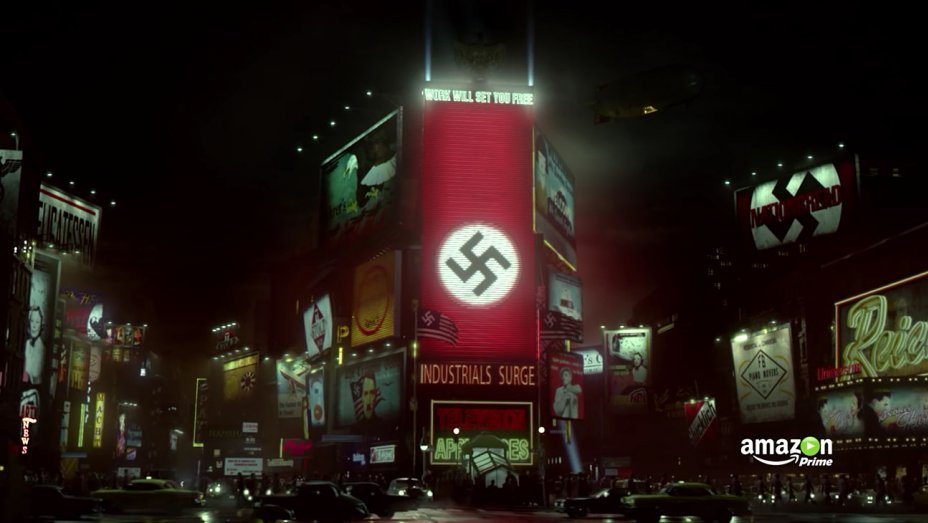
The Man in the High Castle


We’re So Basic, Time Travel Is A Thing

A lot of shows kick off with the premise humanity is screwed—and it’s humanity’s fault. Like, it’s inevitable we mostly die: plague, pollution, nukes, whatever. Point is we decimate ourselves. (Although to be fair sometimes aliens help us with our demise. Mostly it’s just us, though.)

Travelers
Don’t get me wrong, many time travel shows are awesomely plotted but it’s worth noting the audience instantly accepts the idea society inevitably kills itself off—wittingly or unwittingly (mostly wittingly). 

12 Monkeys

In Conclusion…

Sci-fi TV is telling us we don’t trust ourselves, or other races/species we meet, or make. That humanity en masse will generally choose cruelty over kindness; that in the future heroes are sparse on the ground, and usually reluctant. 

While I get where this is coming from—and a lot of it is truly innovative, brilliant television—fingers crossed our cultural subconscious flips a little. I’m game, now and again, for small screen depictions of a future dosed up on delusional optimism. Science fiction is the greatest way to explore not just society's fears, but our hopes too.

Friday, June 9, 2017

Circle: Two Worlds Connected Is Must-See Sci-Fi

(Please note this post includes references to events that
take place in episodes 1-6 of Circle: Two Worlds Connected.)
The best science fiction marries emotion with speculation. South Korean TV series Circle: Two Worlds Connected taps into one of humanity’s basic fears; that science will tamper with the parameters of personality.


Thematically, science fiction television transcends language barriers and cultural differences because every society is curious, if not concerned, about the future, and the unexplained.


An uncomfortable relationship between tech, emotions, and memory is a popular trope in science fiction. Stories exploring the use—or abuses—of advancements in technology are more successful if the audience is tied empathetically to the characters.


Circle: Two Worlds Connected has a winning formula with dominant themes of memory, identity, and family. That most erratic variable—love—usually ruins the equation at some point in scifi, because audiences like to see the warmth of humanity trumping the dispassion of science.


Circle: Two Worlds Connected utilizes the tricky narrative tool of a split timeline. The first half of each episode is set in 2017, the second in a dystopian 2037. The risk with this kind of storytelling structure is events in the present seem futile because viewers have a window into a bleak future.


Creating an immediate emotive link with the audience is paramount. We know what our leads are trying to do isn’t going to work, but we need to care enough to keep watching.


The pilot begins with a flashback to a childhood trauma experienced by two brothers in 2007, so the strength of their bond, even as children, is established. As adults, differing perspectives on that pivotal event creates an ever-widening rift, but their co-dependency persists.


Supernatural has shown a TV series can run for years on the fuel of dysfunctional familial relations. In Circle: Two Worlds Connected one brother studies neuroscience while the other investigates an alien conspiracy. The way the story unfolds aligns us firmly with the “sane” one: until it doesn’t anymore…


The present day timeline offers the possibility of an ageless alien and a number of associated mysteries, most notably the disappearance of our leads’ father. Clues also suggest experiments focusing on memory manipulation are causing student deaths on campus, till now viewed as suicides.


 In the future storyline, aka 2037, Normal Earth is polluted and the rich live in Smart Earth, a city boasting no crime. Smart Earth citizens have chips inserted in their necks, and yes that sense of misgiving specific to mind-control storylines is probably kicking in about now. (Plus the Smart Earth law keepers wear a lot of white: if there’s one thing sci-fi has taught me, it’s never trust the clean!)


At first, we’re unclear as to how the characters from the past connect to those in the future: memories have been manipulated, a violation revealed by the hacker Bluebird. But why? And by whom? How exactly did the Smart B system evolve? We’re also told the brothers became Missing Persons at some point during the time jump, so with each episode, our dread intensifies.


The show feels claustrophobic, no matter how spacious the setting, because the narrative is taking us inside the minds of the characters. Most are lost, searching for a person or particular truths, or looking to hide from memories. The show is seeped in desperation, making each episode increasingly compelling.


A number of characters in Circle: Two Worlds Connected are focused on the tie-in between memory and self. Post Traumatic Stress Disorder can transform memories into tools of self-harm that impinge on decision-making and a person’s ability to function. But this scenario wonders if the removal or suppression of harmful memories is potentially more problematic?

Memory is the recall of experiences, but how the mind stores them and how the present day self views them, impacts their power. Are you really “yourself” when pieces of the puzzle that make up your psyche have been removed?


You may be at peace… But are you truly whole?


Scientific knowledge can create a delusional, God-like mindset, and that problematic perspective lies at the heart of the conflicts here: those empowered by knowledge are abusing that power. Deciding the psychological needs of citizen is a slippery slope, especially when you don’t gain consent.


Smart Earth seems a metaphor for humanity’s timeless response to complex societal issues: use wealth to hide from them. The story shows a safe haven can prove to be a type of prison if those in control have no qualms tampering with your mind—for your own good.


The drama is only twelve episodes long. South Korean television generally opts for a single season series, and as a result shows achieve a level of sustained intensity often missing from Western dramas. No story elements are held over for future seasons; the production team throws everything into the shorter format.


South Korean television is also fabulous at capturing emotive moments; the camera documents myriad emotions flitting across the actors' faces. South Korean actors excel at communicating complex wave of feeling just with their eyes, so prepare to be enthralled.


At the drama’s halfway point I’d guessed some reveals, and missed others. Even now, there are a few directions the story could go, and the set-up makes many plot options viable. I’m equally curious about the past and the future: how did the brothers lose each other? What sequence of events brought them to this tragic situation?


And the big question: who is Byul? Is the woman who mysteriously appeared and doesn’t age, an alien? Or are we seeing a series of clones? Can we even trust the brothers’ childhood memories? Can we trust anyone’s recall at this point?


What is really going on?


Circle: Two Worlds Connected is what brilliant sci-fi is supposed to be, packed with complex characters, exploring many ideas related to our relationship with tech, seeping paranoia and subterfuge, engaging and enthralling the audience with intelligent storytelling. The plot is beautifully crafted, the acting is incredible, and the cinematography is stunning. What more could you ask for?