Showing posts with label scifi. Show all posts

Tuesday, July 30, 2019

Science Fiction TV Turns Toward Biology

Rather than the coldness of computers, imaginative organic science has been popular in scifi TV recently, the prevalence of machinery giving way to a more biological interpretation of the mysteries of the universe. To put it bluntly, spores, trees and fungi infect our perception of the future.


Imagining Future Science

What will science allow humanity to do in the future? That is the core of science fiction. For many years the focus was on projecting a version of current technology. Yet recently it feels like a more imaginative interpretation is happening.

Plants and organisms, even if they're made of light and data rather than solid matter, are everywhere. Has the way we think about what is possible, changed?

Contrary to popular belief, science isn't linear. It experiences trends. One recurrent theme has been time, or the manipulation of time, and that has bled into our entertainment, bringing with it an almost spiritual aspect.

Below are some popular television shows that include an organic element (for want of a better term). Perhaps organisms are the ultimate storytelling metaphor for life and a sense of mortality. Maybe, like time, they are symbolic of the boundaries that fascinate humanity the most.

12 Monkeys


The red forest is an integral part of this show's mythology.

12 Monkeys is a beautifully written series. Time travel is a twisting concept and it can be difficult to maintain a narrative hold. The show begins with the character of Cole being sent back in time to stop a plague that wipes out humanity. He partners with the virologist Cassie, and they encounter resistance from a group called The 12 Monkeys.

The 12 Monkeys are revealed to be fanatics dedicated to bringing The Red Forest into existence. The red forest exists beyond time. At certain points characters drink tea made from leaves sourced in the red forest, and experience visions.

The scenes in the red forest are eerie and compelling. They tie in with science but seem to speak to a primal part of the mind.

Star Trek Discovery


A recent addition to the Star Trek television universe, Discovery moves beyond the standard ways of navigating through space that have been created by Star Trek over the years, and introduces the Spore Drive.

You'll see a lot of debate online regarding the plausibility of this tech. The Spore Drive takes the ship from one place to another in an instance. Basically the idea is the technology utilizes a network of spores to move across the galaxy.

Rather than arguing the logistics or potentiality, my interest is focused on the fact it is a spore-driven concept: modeled on an organic idea. That at the heart (or should that be seed) of Star Trek's greatest engineering technology, are spores.

 The OA


An alternate reality thriller, The OA follows a lead character that inadvertently travelled across dimensions, a journey kick started by a series of body motions that need to be carried out by a group.

The recent season introduced the idea of a giant tree network that spreads across dimensions. The tree communicated with our lead. Seeds and branches are utilized as a way of explaining a complex multiverse reality. The tree also represents a continuing thematic thread for the show: that community is essential to survival.

The OA is at heart a series about alternate realities but it uses this exploration of a possible corner of science to also explore the concept of self. The OA appears to blend science and the spiritual, but it's interesting that a large reveal in regards to interdimensionality takes science to an organic place.

The Expanse


A brilliant example of science fiction TV, one of the story cornerstones to kick start the show is Detective Miller's hunt for a missing woman. By the end of the first season we see that she has been taken over by a seemingly sentient organism.

The Expanse includes a lot of political drama. Conspiracies abound, thanks to a book series that provides fantastic fodder in terms of complex narrative. But it was the futuristic organism (I've seen it referenced online as protomolecule) transforming people that cements an organic element within a series that prides itself on scientific accuracy.

Aliens are behind the infectious construct. The plot is quite complex and becomes more so when it's revealed humanity has begun its own experiments using the protomolecule. But a protomolecule that manipulates biomass, with references to seeds and infections, makes it a great example of an organic representation of futuristic science.

In conclusion…

What messages are currently echoing across small screens in the science fiction genre?

Perhaps that everything in the universe is interconnected. That our minds relate to plants and living organisms as representations of life and death, themes that are always a human preoccupation even when we're travelling the stars.

It's interesting to see where our cultural imagination takes us. Here's to constantly intriguing unfolding scifi stories on the small screen.


Thursday, May 31, 2018

A dozen reasons why a Star Trek medical drama would make for great TV


Doctors are a staple of the Star Trek universe. But how great would a series focused entirely on medical characters be? Imagine the possibilities…

People love medical shows
Old school moment.
The one hour scripted medical series has produced a lot of successful television: House, Grey’s Anatomy, ER for starters, not forgetting heartwarming and humorous classics like MASH and Scrubs.

I'm also including the scientists who work as MEs and associated roles in procedurals—say, forensic anthropologist in Bones, a psychologist focusing on mental health and crime in Mind Hunter, and the forensic scientist in Body of Proof.

No one can deny medicine/medical science practitioners and researchers create entertaining television. A futuristic medical drama seems a logical next step. Why not make it part of a popular franchise?

Here are a dozen reasons Star Trek Medical would be awesome aka a solid investment for a smart network.

Star Trek can get a version of a
sonic screwdriver

Seriously, do you lot not have one of these?
Star Trek shows have always held to the idea advancements in science do not make humans Godlike. The medical science in Star Trek extrapolates from modern science, but also takes imaginative leaps. 

In medical subplots, Starfleet doctor characters have to face the truth: that healing tech is fallible, meaning people still die. Humanity’s battle against death retains tension in the Star Trek universe.

A healing tool that helps tackles medical issues in a vague way would make for a great series trademark. Dr Who has a classic fix-all tool that overcomes a lot—including plot holes. 

Would be fascinating to see what Trek comes up with.


Peak Star Trek aka addressing social issues

The issue of the wealthy receiving better medical care than the poor,
addressed in ST Voyager episode Critical Care, remains sadly relevant.
Medical storylines in Trek shows usually address blurring lines between morals, ethics, duty, and science. A medical drama in the future can visit worlds with unimaginable quandaries. Say, wealthy societies letting people die because corporate greed has out-priced medical care for the average citizen (oh, wait…).

Other possible issues to mull over are stem cell usage, biotech, plagues, vaccines, discrimination based on gene status, organ marketing, and the use of radio frequency in medicine.

Popular tropes from medical dramas set in the present day also work: misdiagnosis, medical genius with bad social skills, mentor and apprentice issues, problems with bureaucracy, discrimination based on diagnosis, experimental surgeries, human testing, reproduction, and euthanasia—for starters.


Endless VIP guest stars, including Q

The wildcard is always welcome.
Delving into the back catalogue of Trek characters... What a feast of storytelling potential. I could imagine Q offering to heal a loved one—for a price. (Moral quandaries are his forte.) Obviously the Borg, or an ex-Borg, would rock up at some point. And any captain ever is eternally welcome!

Star Trek isn’t averse to time travel, so getting characters from different timelines (or realities) is never a problem plot-wise. Older and younger versions of fan faves would be fun to see. Movie crossover characters, characters from alternate realities—so much fun to be had.


The Prime Directive as a
trope/storytelling device

Are we seriously trying to sell this Prime Directive stuff?
The good old super-flawed Prime Directive offers an array of plot opportunities. The rule is Starfleet doesn't interfere with developing cultures, but such an inactive stance isn't always an easy choice—especially for a doctor.

The pros and cons of non-interference with other civilizations lends itself to medical moral dilemmas and the problematic (from Starfleet’s perspective) Hippocratic oath. Whether a character chooses for or against, there are often unforeseen repercussions.


Don’t forget the battlefield medics

The revelation the Jem'Hadar were drug addicted soldiers
made them more than just indoctrinated killing machines.
For a peace-loving mob, the Federation spends a LOT of time at war. We’ve seen field medics and storylines related to conflict scenarios in various Star Trek TV shows. Star Fleet medics are at greater risk of kidnapping too since they’re well trained. Storylines set in adrenalized, extreme conditions, where empathy and aggression face off, make for entertaining television. 

Fixed shots were a signature element of past Trek TV dramas. And traditionally a lot of Star Trek medical scenes had a sense of distance, the treatments being tech-focused, making for family-friendly viewing.

Change these two elements, and the whole mood changes. Firstly, modernize the visual format to sharper edits and handheld shots, upping the ante of combat scenes. Secondly, introduce more archaic battlefield conditions. Seeing Starfleet medics getting their hands bloody, literally, would be shocking.


Starfleet Medical Academy

Side note: these cadets proved dodgy AF.
The cadets of Starfleet have never had a series, just guest appearances in other shows. In a TV market that likes late teen/early twenty casts, a drama set at the cadet level would be worth exploring.

Starfleet Medical has been referenced numerous times throughout Trek TV shows so the place isn’t unknown to fans of ST. Think a fusion of a high school/college series, and a medical drama.

Alternately, interns could showcase different places a Starfleet doctor might be posted. Or scatter a graduating class across the galaxy, some even ending up on the opposite side of a war to the Federation, as medical defectors. The sky is the limit (or not).


Costume me up, Scottie

Casual Friday.
Oh, the outfits. Utilitarian has never been so snazzy. Seeing the interpretations of Star Fleet uniforms is always fun. New doctor and nurse uniforms might be interesting.

Not gonna lie though, the aliens bring the freshest styles. Headpieces get a lot of action, as do floaty fabrics. Stepping it up, at this point I’m ready for threads that breathe, read body data, and might be symbiotic organisms.

The politics and intrigue of the Federation

I spy... Section 31!
My favorite parts of the Star Trek reality? Later shows when the gray shades of espionage came into play, peeling glossy surface layers from the utopian tendencies of earlier outings.

Corruption in Starfleet has always produced interesting episodes. On the medical front maybe a black market for drugs, social media and psychological manipulation, conspiracies relating to availability of treatments, poaching medical discoveries from other planets, doctors with political agendas/affiliations, discrimination against clones and other races, religious beliefs that conflict with medical protocols, treatment of prisoners of war for political gain… Lots to explore.


Give us some doc love to ship

Cuties.
Romance in medical dramas is part of the genre sell. Maybe it’s the life and death vibe: romantic  passion balancing out the heavy psychological fare.

Star Trek shows boast interesting couples and hook-ups. I would say unexpected relationships and weird ships have long been a positive aspect of Star Trek. Not just partners from different planets, but even holographic love interests.

Of course in today’s world, television is showing more than hetero couples so there are a wider range of romantic options on the table for a new Trek.


I wanna see all the docs again

Bring back Bev!
Star Trek has had so many fantastic doctor characters, and a Star Trek medical drama means they can pop by whether as lecturers, mentors, patients—or holograms. Not just human ones but alien ones too. All members of Doctor Club are welcome!

Historically famous docs from the past are encouraged, whether via time travel, hologram or some other storytelling device. Fictional doctors are likewise welcome.


New aliens

Always fun to make (Trek) friends.
One of the best things about Star Trek: the aliens introduced to audiences along the way. And not just as cultures the characters cross paths with but as Federation members too. Each alien character is a chance to introduce a whole new ideology.

Sure, there are fans of Vulcans, Klingons, Romulans, Bajorans, Cardassians, Batazoids, and many other established ST races out there who would be happy to see them again. But meeting new races is part of the thrill of a fresh ST series.


Final note: This idea originally came from my director friend Rob, whose suggestion I pitch a medical Star Trek drama kick started this blog post.

Tuesday, February 20, 2018

Why So Sad Science Fiction TV?

Dark Matter
A malaise has taken over futuristic television. Catching up on your fave science fiction series can leave a fan feeling down. We’ve lost hella faith in humanity over the last few decades.

When I was kid the message from Star Trek shows was, hey humanity made a few mistakes along the way but we became the greatest race in the galaxy! HIGH FIVE.

Star Fleet wasn’t technically the armed forces—although they seemed to go to war a lot for supposed pacifists. But nobody was forced to enlist: people lost their minds trying to get into the Academy.

Star Trek: The Next Generation
The Federation presented as the coolest cult ever, where nobody minded wearing spandex to work and audiences were fervently on board (excuse the pun) with a future where humanity was the teacher’s pet. Or to be more precise, Q’s.

Now the Federation has a dodgy record with multiple cover-ups and a lot of internal issues—Section 31’s wet work for starters—not to mention god-awful xenophobia/alienophobia incidents over the years. 

Star Trek Discovery
The downhill slide into a pessimistic, messed up vision extends way beyond Federation borders. Sucky versions of the future dominate recent sci-fi TV offerings across the intergalactic, multiple realities board.

Sure, a few humans reluctantly battle on in a hero-esque way but overall our rep aint good. I mean you can’t even trust the Jedi’s these days (but that’s a whole other post).

Here are half a dozen reasons sci-fi is taking a break from hopefulness. If Sci-fi TV were a person they’d be wearily sitting on the curb having a smoke, all the while knowing cigarettes can kill.


Humans Are Worriers

In a way, sci-fi is a form of therapy. The cultural subconscious worries about robots and AI and pollution and corporations sucking us dry(er), so we work through those issues with dark AF visual storytelling.

Black Mirror
Sci-Fi doesn't tell anybody to lighten up. Instead it agrees we should buckle down.
Television lets us explore terrible fears through the filter of the screen, satisfying doomsday worries and making that bomb shelter seem a legit investment.

The Colony


We Respect Gritty Entertainment

Science fiction as a genre has enough trouble being taken seriously (google sci-fi ghetto if you’re not clued in on the discrimination), so optimistic sci-fi television would be a hella hard sell on two levels.

Electric Dreams
We live in a world that views optimism as a form of self-delusion. We scoff at the idea of happy endings and nod sombrely while people are chopped up onscreen. In terms of the future, we expect governments to betray most of the universe.

The Expanse


The Present Day Isn’t Selling The Hope

We def don’t trust governments. In the past most looked after their country’s citizens and ignored everyone else—now they don’t even do that (example, AMERICA). In the future, we’re not expecting a lot of empathy.

And by a lot, I mean any.

3%
Corporations are also a massive sci-fi issue. People are the product businesses haven’t quite locked down yet. Sci-fi television says hey, give it time.

Altered Carbon


And We’re Suspicious of The Sell

If a story presents a sweet future, utopia turns to dystopia pretty damn fast. The cost of paradise is always revealed to be brutal. Sci-Fi is pro paranoia. The worst-case scenario is usually legit.

The 100
The rich are mean and discrimination is always a thing. Always. The poor lose rights and we find new groups to treat as less than human, like clones, robots, and aliens.

Westworld


Humanity Is Cruel AF

Whether it’s an alternate timeline or a parallel universe, psychos always have the upper hand. Kind people are still around but they’re rarely (if ever) in power, and are generally persecuted, whether psychologically trampled or physically tortured.

The OA
The feel is always that humanity could have/should have been better, and that even in alternate versions of reality, we still mess up big-time.

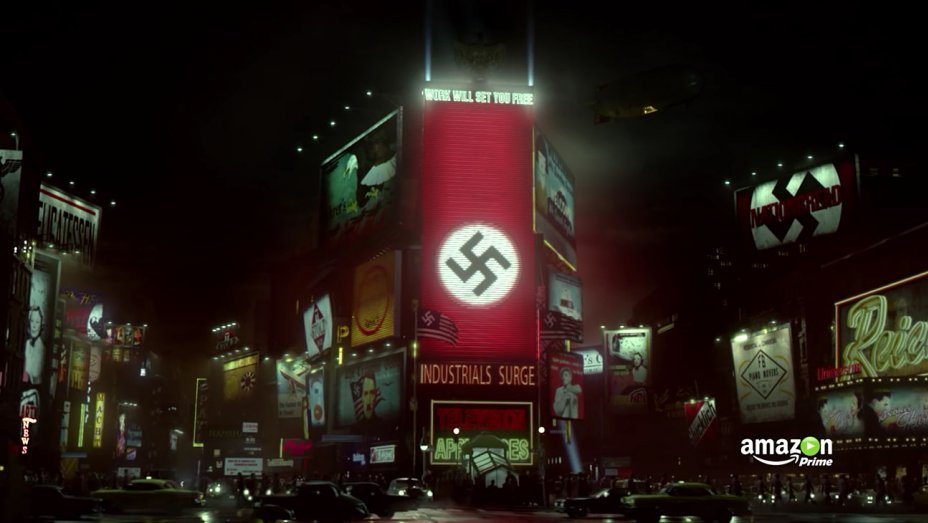
The Man in the High Castle


We’re So Basic, Time Travel Is A Thing

A lot of shows kick off with the premise humanity is screwed—and it’s humanity’s fault. Like, it’s inevitable we mostly die: plague, pollution, nukes, whatever. Point is we decimate ourselves. (Although to be fair sometimes aliens help us with our demise. Mostly it’s just us, though.)

Travelers
Don’t get me wrong, many time travel shows are awesomely plotted but it’s worth noting the audience instantly accepts the idea society inevitably kills itself off—wittingly or unwittingly (mostly wittingly). 

12 Monkeys

In Conclusion…

Sci-fi TV is telling us we don’t trust ourselves, or other races/species we meet, or make. That humanity en masse will generally choose cruelty over kindness; that in the future heroes are sparse on the ground, and usually reluctant. 

While I get where this is coming from—and a lot of it is truly innovative, brilliant television—fingers crossed our cultural subconscious flips a little. I’m game, now and again, for small screen depictions of a future dosed up on delusional optimism. Science fiction is the greatest way to explore not just society's fears, but our hopes too.