Showing posts with label tv series. Show all posts

Monday, April 30, 2018

The Contradicting Tastes of Today's TV Audience


Trying to satisfy modern viewers is a complex riddle. Everyone imagines they know the answer, but even a TV series considered a sure bet can crash and burn.

The quality of the product is only one aspect; scheduling, marketing, and social media presence (in terms of public reaction/interaction) play a part.

But the basic pitch is the first step. And whether or not a pilot is picked up is influenced by broad ideas of what the audience wants.

Turns out today’s audiences are a fickle bunch.


Nostalgia vs. Dissatisfaction With Reboots

For a long time television makers clung to the idea reboots were a sure-fire key to a ratings winner. If people have fond memories of the original, they’ll love the reboot, right?

Wrong.

Whether the show is faithful to the original or reworked to match current storytelling styles, the initial interest soon turns to dissatisfaction, disinterest, and downright hostility. Sure, a few succeed, but it’s rare.

Dynasty
You see a similar effect with shows that are sourced from books and graphic novels or comics, but the success rate is higher. Still, it’s far from a guaranteed route to small screen success.

In each case, the network feels the financial risk is lessened because of the established fan base. But the premise is flawed.

Shadowhunters
Personally, I loath the presumption a bad show based on a book series or comic will be an easier sell than a great original show. I’d much prefer something fresh and fantastic, than a mediocre adaptation soon dropped. The fear of losing money has made the industry forget so many cult shows became hits out of nowhere. In summary, this business model is overrated.

The best take on the nostalgia angle has proven to be creating a show that reminds viewers of a past series, but is technically a fresh entity. People experience familiarity but the show isn’t competing with an earlier version of itself in their memories.

Stranger Things

Sex and Violence Sells vs.
Tired of Sex and Violence

Sex and violence in entertainment has been increasing over the years to the point where it’s not just common, but expected in adult TV fare.

What’s interesting is “gritty” television has become code for content with graphic sex and violence. A show gains cred with the audience by offering excessively violent scenes. They take it more seriously: darker themes have become synonymous with an interpretation of quality.

Westworld
I believe it has to do with a Western interpretation of feminine and masculine, in the traditional sense. Sex and violence are connected to ideas of strength and power, past definitions of masculinity. Thus shows that offer more “masculine” fare—to clarify, it can be female characters partaking in sex and violence; the trait itself is what is subconsciously gender identified by the culture—are taken more seriously.

Game of Thrones
Television shows that focus on traits historically viewed as more traditionally feminine, are more readily derided: quirky, kind, romantic are now often presented in simplified formats, as if the themes are only allowed to exist in substandard material.

This is obviously a fallacy. Television can be intelligent with or without graphic violence and sex. But the audience has become accustomed to this idea and Western networks now use it as a framework for new material. When combined with intelligent plotting, it is often successful. If not, well, not so much. 


Santa Clarita Diet
As a result, some viewers are tiring of fare that is graphic yet doesn’t have a decent storytelling foundation. Upping the anti, in terms of risky content, isn’t the drawcard it once was. Audiences are suffering a form of ennui when it comes to violence and sex. 

The formula needs to be redefined: more complex storylines, and a cleverer use of onscreen violence that isn’t just gratuitous, and inclusion of a broader emotional spectrum that may have been omitted from “gritty” fare in the past.

Walking Dead

Intelligent Storylines vs. Too Complicated

With so much television production these days, and full season drops becoming common, people are demanding diverse scripted dramas. Jaded audiences are less tolerant of lazy and generic television writing.

Thing is, how intelligent a script are we talking? This is also the point where emotional intelligence comes into play. A lot of great television isn’t so much about standardized intelligence, as it is about brilliant characterization.

12 Monkeys
I’ve written about E.I. before. Nuanced characters and complex emotional subtext make for memorable television but like a classic novel, sometimes the person taking in the story just doesn’t get it.

Sherlock
A quick browse through recap blogs shows even avid fans may miss underlying themes and character motivations in innovative episodes. Intrigued is one thing; puzzled is another.

Twists are great, but if the viewer can’t understand the motivation behind them, and foresee the potential consequences, they end up disgruntled rather than engrossed.

Finding the fine line between challenging and entertaining television, without alienating less intelligent viewers, is key. And it’s not an easy task.
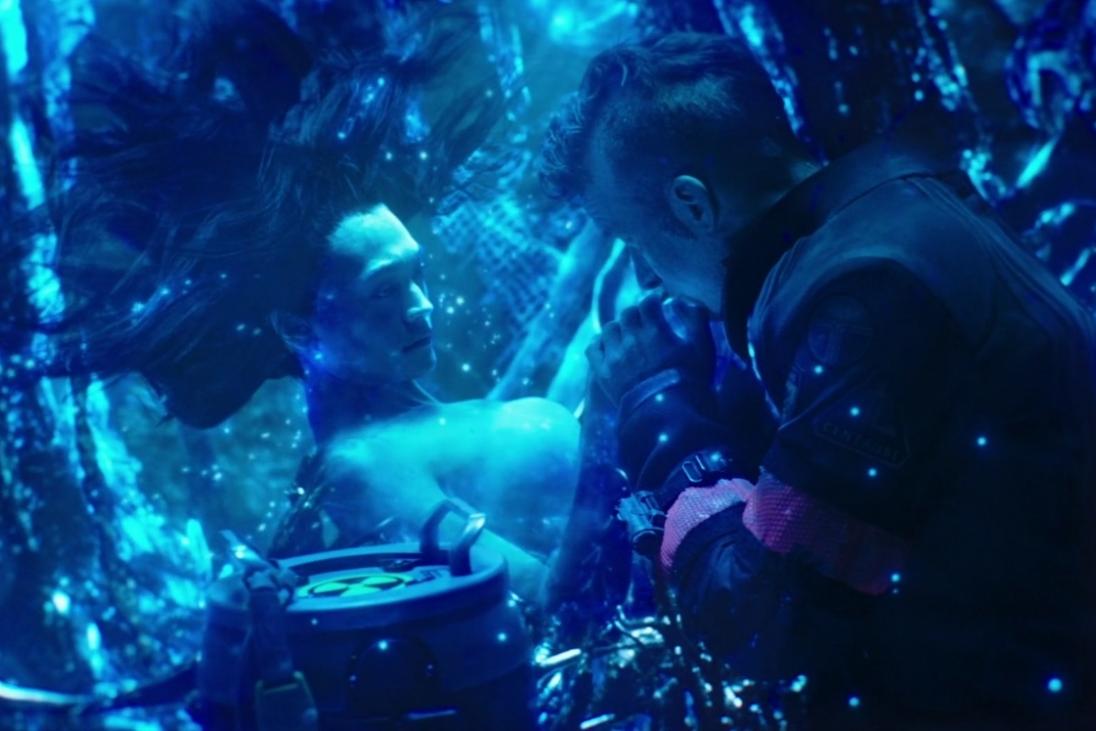
The Expanse

Celebrating Tropes vs. Trope Fatigue

Tropes aka plot devices are a funny thing. Storytelling patterns that reappear over and over, they’re a large part of what people love about television. Thing is we’re comfortable with the familiar, but familiarity can also breed contempt.

At it’s best a trope is a tool, and they’re favorites for a reason. Some tropes are associated with certain genres. Star-crossed lovers are popular in teen dramas, and odd couple pairings in procedurals. Sci-fi is packed with antiheroes and reluctant heroes who end up fighting the system.

Elementary
Modern audiences are beginning to split when it comes to tropes. A lot of people love feeling comfortable with certain types of characters, and plot twists. They prefer shows that are remixes of their favorite elements. Tropes for many TV writers are a necessary part of their creative arsenal.
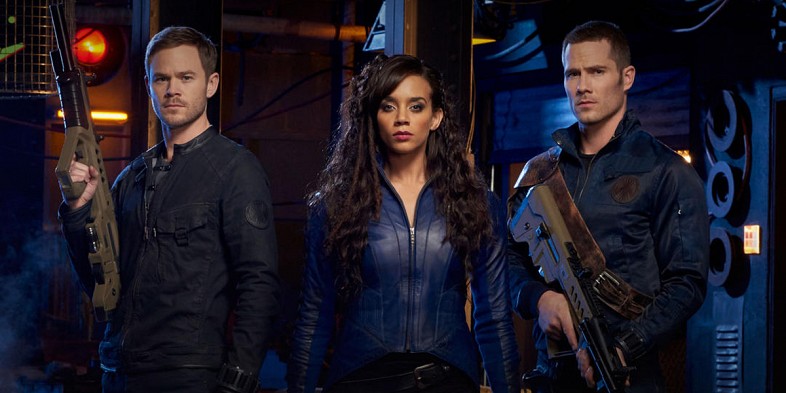
Killjoys
On the other hand, other viewers are extremely tired of seeing the same tropes repackaged. They want fresh blood. Added to which, a lot of established tropes aren’t quite up with the times, being at best stereotypical, at worst sexist or racist.

A less heavy-handed approach is probably the path of the future; a sparing use of established storytelling devices mixed with the creation of new ones that challenge old norms. Whether or not this makes for riveting TV is still to be seen. At least it'll be an interesting ride.

Riverdale


Tuesday, February 20, 2018

Why So Sad Science Fiction TV?

Dark Matter
A malaise has taken over futuristic television. Catching up on your fave science fiction series can leave a fan feeling down. We’ve lost hella faith in humanity over the last few decades.

When I was kid the message from Star Trek shows was, hey humanity made a few mistakes along the way but we became the greatest race in the galaxy! HIGH FIVE.

Star Fleet wasn’t technically the armed forces—although they seemed to go to war a lot for supposed pacifists. But nobody was forced to enlist: people lost their minds trying to get into the Academy.

Star Trek: The Next Generation
The Federation presented as the coolest cult ever, where nobody minded wearing spandex to work and audiences were fervently on board (excuse the pun) with a future where humanity was the teacher’s pet. Or to be more precise, Q’s.

Now the Federation has a dodgy record with multiple cover-ups and a lot of internal issues—Section 31’s wet work for starters—not to mention god-awful xenophobia/alienophobia incidents over the years. 

Star Trek Discovery
The downhill slide into a pessimistic, messed up vision extends way beyond Federation borders. Sucky versions of the future dominate recent sci-fi TV offerings across the intergalactic, multiple realities board.

Sure, a few humans reluctantly battle on in a hero-esque way but overall our rep aint good. I mean you can’t even trust the Jedi’s these days (but that’s a whole other post).

Here are half a dozen reasons sci-fi is taking a break from hopefulness. If Sci-fi TV were a person they’d be wearily sitting on the curb having a smoke, all the while knowing cigarettes can kill.


Humans Are Worriers

In a way, sci-fi is a form of therapy. The cultural subconscious worries about robots and AI and pollution and corporations sucking us dry(er), so we work through those issues with dark AF visual storytelling.

Black Mirror
Sci-Fi doesn't tell anybody to lighten up. Instead it agrees we should buckle down.
Television lets us explore terrible fears through the filter of the screen, satisfying doomsday worries and making that bomb shelter seem a legit investment.

The Colony


We Respect Gritty Entertainment

Science fiction as a genre has enough trouble being taken seriously (google sci-fi ghetto if you’re not clued in on the discrimination), so optimistic sci-fi television would be a hella hard sell on two levels.

Electric Dreams
We live in a world that views optimism as a form of self-delusion. We scoff at the idea of happy endings and nod sombrely while people are chopped up onscreen. In terms of the future, we expect governments to betray most of the universe.

The Expanse


The Present Day Isn’t Selling The Hope

We def don’t trust governments. In the past most looked after their country’s citizens and ignored everyone else—now they don’t even do that (example, AMERICA). In the future, we’re not expecting a lot of empathy.

And by a lot, I mean any.

3%
Corporations are also a massive sci-fi issue. People are the product businesses haven’t quite locked down yet. Sci-fi television says hey, give it time.

Altered Carbon


And We’re Suspicious of The Sell

If a story presents a sweet future, utopia turns to dystopia pretty damn fast. The cost of paradise is always revealed to be brutal. Sci-Fi is pro paranoia. The worst-case scenario is usually legit.

The 100
The rich are mean and discrimination is always a thing. Always. The poor lose rights and we find new groups to treat as less than human, like clones, robots, and aliens.

Westworld


Humanity Is Cruel AF

Whether it’s an alternate timeline or a parallel universe, psychos always have the upper hand. Kind people are still around but they’re rarely (if ever) in power, and are generally persecuted, whether psychologically trampled or physically tortured.

The OA
The feel is always that humanity could have/should have been better, and that even in alternate versions of reality, we still mess up big-time.

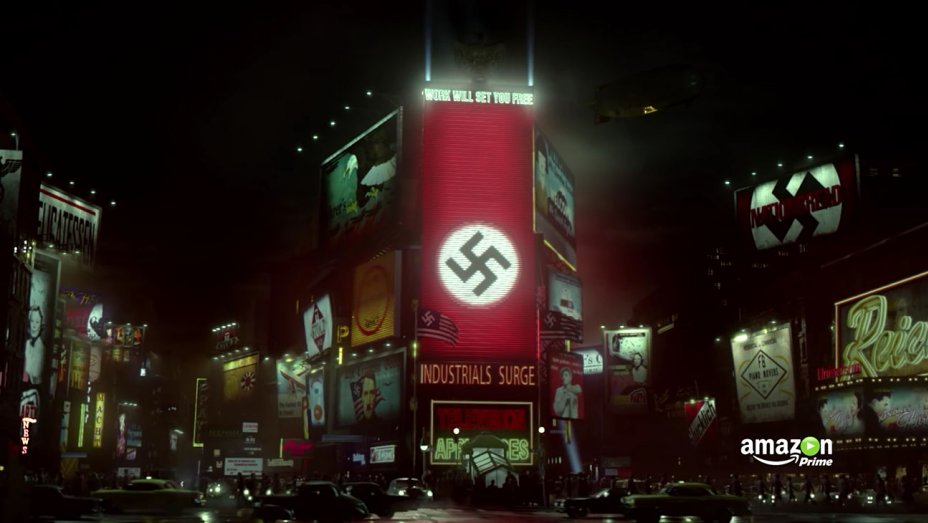
The Man in the High Castle


We’re So Basic, Time Travel Is A Thing

A lot of shows kick off with the premise humanity is screwed—and it’s humanity’s fault. Like, it’s inevitable we mostly die: plague, pollution, nukes, whatever. Point is we decimate ourselves. (Although to be fair sometimes aliens help us with our demise. Mostly it’s just us, though.)

Travelers
Don’t get me wrong, many time travel shows are awesomely plotted but it’s worth noting the audience instantly accepts the idea society inevitably kills itself off—wittingly or unwittingly (mostly wittingly). 

12 Monkeys

In Conclusion…

Sci-fi TV is telling us we don’t trust ourselves, or other races/species we meet, or make. That humanity en masse will generally choose cruelty over kindness; that in the future heroes are sparse on the ground, and usually reluctant. 

While I get where this is coming from—and a lot of it is truly innovative, brilliant television—fingers crossed our cultural subconscious flips a little. I’m game, now and again, for small screen depictions of a future dosed up on delusional optimism. Science fiction is the greatest way to explore not just society's fears, but our hopes too.

Wednesday, July 12, 2017

Reflections of, and on Pretty Little Liars


Pretty Little Liars, in essence, held up a mirror to society’s perception of teenage girls. Beneath the outrageous plots, the series proved to be a unique platform exploring cyber bullying, teen sexuality, and myriad interpretations of female empowerment in modern America.

How do you sum up seven seasons of a show in one blog post? Pretty Little Liars was an interesting, hypnotic, and addictive series, occasionally a hot mess, sometimes sublime, and often a stunning feat of visual storytelling.

The show that inspired text dread.
“Hyperreality” has always been a catch cry of the show. Teen life in the made up town of Rosewood was both familiar and unfamiliar, like a strange dream: viewers were immersed, and then constantly saturated, in the surreal, fantastical intensity.

The story kicked off with the blackmail of our leads via a cyber-bully known as “A” one year after their friend Alison disappeared. Each girl has something to hide, and A manipulates our leads like puppets… But when Alison’s body shows up the “game” becomes dangerous.

Sometimes "A" went for old school over tech.
Over the course of the series more than one A is revealed, but to be honest, these twists seem somewhat irrelevant: the power of the show lies in the journey.

At each step the “liars”,  as the group of girls are known, chose between loyalty to friends, family, or lovers; considered how far they’re go to protect a secret or expose the truth; and decided who to believe—and who to lie to.

(Round of applause from Team Sparia.)


The adults of Rosewood, flawed by their suburban mindset, excel at ethically questionable choices and distasteful compromises to protect their concept of family and more importantly, reputation. Most men in Rosewood were revealed to be either incompetent, corrupt, weak, predatory—or all of the above.

Moms Of PLL, the spin-off we're all waiting for.
There were as many references to classic film and literature as there were to pop culture. Pretty Little Liars wasn’t afraid to be clever, and celebrated intelligent women, but it also explored the pitfalls and false safety that came from relying on superior intellect: the hubris of a high IQ and an arguably low EIQ.

Perception is key, and at times PLL felt like a kaleidoscope. Twist the lens a little, and you could see another perspective. Being “strong” was open to interpretation. Emily and Hanna’s versions differed greatly from, say, Mona's and Charlotte's.

When you and your friends suddenly become bridal models.
The character of Spencer was arguably the leader of the liars. It could also be said she qualified as somewhat of a bully. Deciding on a culprit, she pursued and persecuted with zealous. And while remorseful when her conclusions proved wrong, she was just as rabid with the next person in her sights.

The cool thing was you could throw ideas like this around online, and have myriad reactions come back at you because the show existed in a relatively new mental zone: the fandom got to enjoy a TV show in an era of rampant social media interaction spanning podcast, recaps and fan fiction. You were never alone in watching Pretty Little Liars—the Internet made sure of that.

Let's be honest: pre-disappearance Alison
was a hella scary mean girl.
The leads’ burgeoning sexuality was explored from a few angles. Some of the girls experimented with employing sexuality as a manipulative tool. Others were judged based on their love lives, persecuted via rumor and speculation.

And of course the series showed that love leads to vulnerability as much as empowerment. An ex-boyfriend murdered Maya, and other supporting characters like Shana and Ian were driven by love to try and harm the liars, while A uses the liars’ lovers to manipulate them.

(Good gasp face was a prerequisite for a role on this show btw.)


But it wasn't all hugs and roses. Aria’s relationship with her predatory teacher Ezra Fitz divided fans. (The decision to pair the characters with their original high school love interests by the series finale, including said teacher, was another divisive choice.)

Rarely has a show soared so high, tripped over its own feet, picked itself up, and reached for the stars again—only to repeat the process. Part of the erratic quality was due to the epic amount of episodes (totaling 160). This meant an array of writers, speedy production, and the problem of guest actors being unavailable as their success soared, cutting off storylines. (And viewers can only guess at network input as the show’s popularity grew.)

How Jason made it through this show
sane remains the greatest mystery.
At it’s worst, PLL stumbled with characters who weren’t consistent in their behavior, dropped narratives, a problematic presentation of transgender character Charlotte, occasionally romanticized presentation of mental illness (including the psychiatric hospital that was more like a bed and breakfast from Twin Peaks), and got out of narrative corners they’d written themselves into by employing outlandish soapie plot devices.

Cece/Charlotte loved a good game.
Alison’s return from the faux-dead was difficult because the character had reached mythic proportions in the mind of viewers. Likewise the infamous time jump, that saw the story move forward a few years, was extremely problematic—the evolution of the characters appeared to have stalled, or even backtracked, in their years away from the screen.

Post time jump liars were a tad boozy.
But at its best, PLL had audiences on the edge of their seat with stories both diabolical and touching, offering interesting and multi-faceted social commentary, and complex female characters who (mostly) made brave, clever choices in the face of adversity.

Who could forget Emily coming out to her dad Wayne, or her mom Pam’s difficulties adjusting? Or the moment the audience learned of Hannah’s history with an eating disorder? Or discovering the perfect Spencer had a drug problem? Or realizing the long-term, deeply damaging impact Alison’s bullying had on Mona and Lucas?

Wayne ftw.
The hypocrisy of the deeply flawed and wealthy Hastings family was riveting. Ashley exchanging sexual favors with a corrupt cop to keep her daughter’s criminal record clean was thought provoking. The familial isolation of Caleb and Tobey, and their subsequent self-sufficiency and emotional vulnerability was well written.

The Sweet Team
And visually let’s not forget the wild styling and stunning direction (the show had a darkness to it that wasn’t just metaphorical)—not to mention an actual “noir” episode. Pretty Little Liars managed to straddle the commercial requirements of being on a relatively conservative network while pushing the boundaries of standard teen TV. (Kudos on the soundtrack too.)

Remember Ravenswood?
Because empowerment was a core theme, one of the most disturbing (yet enthralling) elements of the series was a lust for control, and the resulting dehumanization. The mysterious A treated the liars like dolls, playing with their lives, and at one point built a life-sized dollhouse, complete with replica bedrooms, in which to imprison them. Dolls, masks, magic tricks, and illusions… Pretty Little Liars was constantly upping its symbolic game.

Like a never-ending whodunit, the series piled on the mysteries and crimes. Life for the liars was full of twisted adventures, usually with A at the core. “This enemy is everywhere and nowhere at the same time,” said resident hacker Caleb of the elusive troublemaker, while Emily baldly stated, “A is a terrorist.”

Hardcore.
The show was fuelled by choice and consequence but the guiding light was that the often tested bond between the young women  proved unbreakable. The liars’ litany of mistakes is breathtaking, yet their character flaws and weaknesses were acknowledged and accepted by the rest of the crew. Female friendship was given more screen time than romantic love.

It's Tippy!
So, time to say vale PLL. Goodbye to wildly inappropriate cocktail funeral attire, and fantastical storylines that included clues from Tippy the talking bird. To a town that had more social events than New York City. To a show that even when it momentarily failed, failed with flair. To Mona, one of my favorite female characters ever on television.

Such an interesting woman.
To a place where the years and seasons never seemed to follow the laws of the universe. To infinite procedural red herrings. To countless examples of awe-inspiring attempts at emotional manipulation. To the endless employment of popular plot devices, from secret adoptions, psychics, hidden tunnels, unearthed bodies, infidelity, and evil twins (‘ello Alex).

Hats off to the hard work and imagination of a cast and crew who took the original premise and ran with it to entertaining extremes. Thanks for showing that a group of teenage girls were capable of not just surviving persecution, but fighting back, while taking control of their futures—with the help of their friends.